
Last updated November 2, 2026
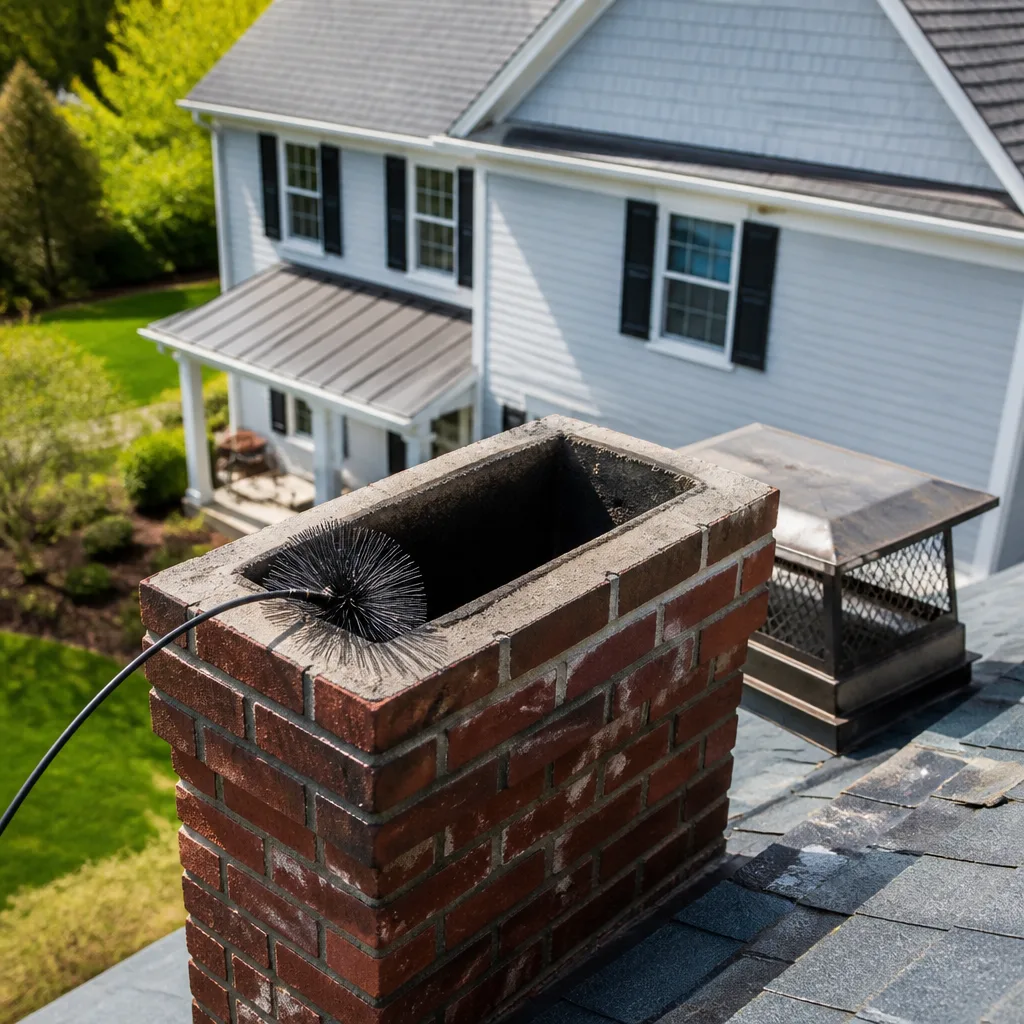 Sweep & inspection
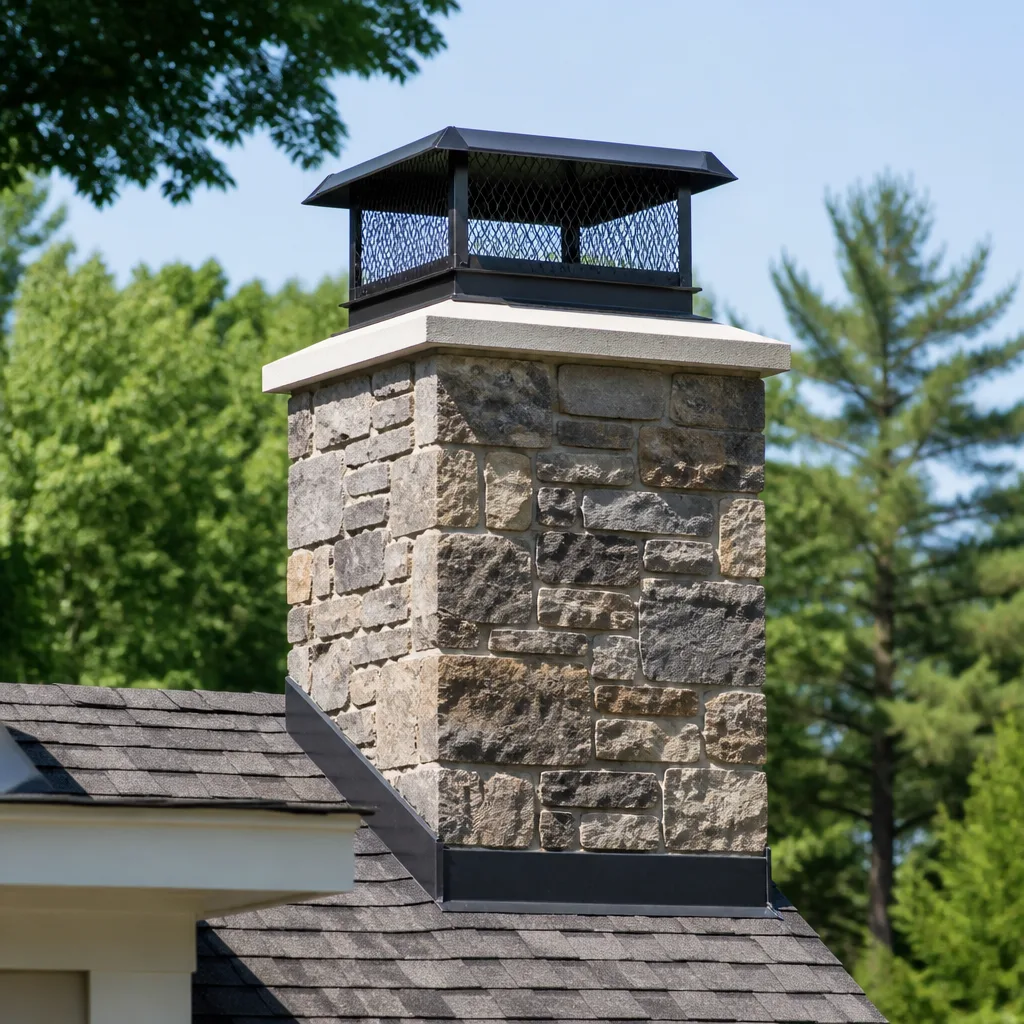 Caps & crowns
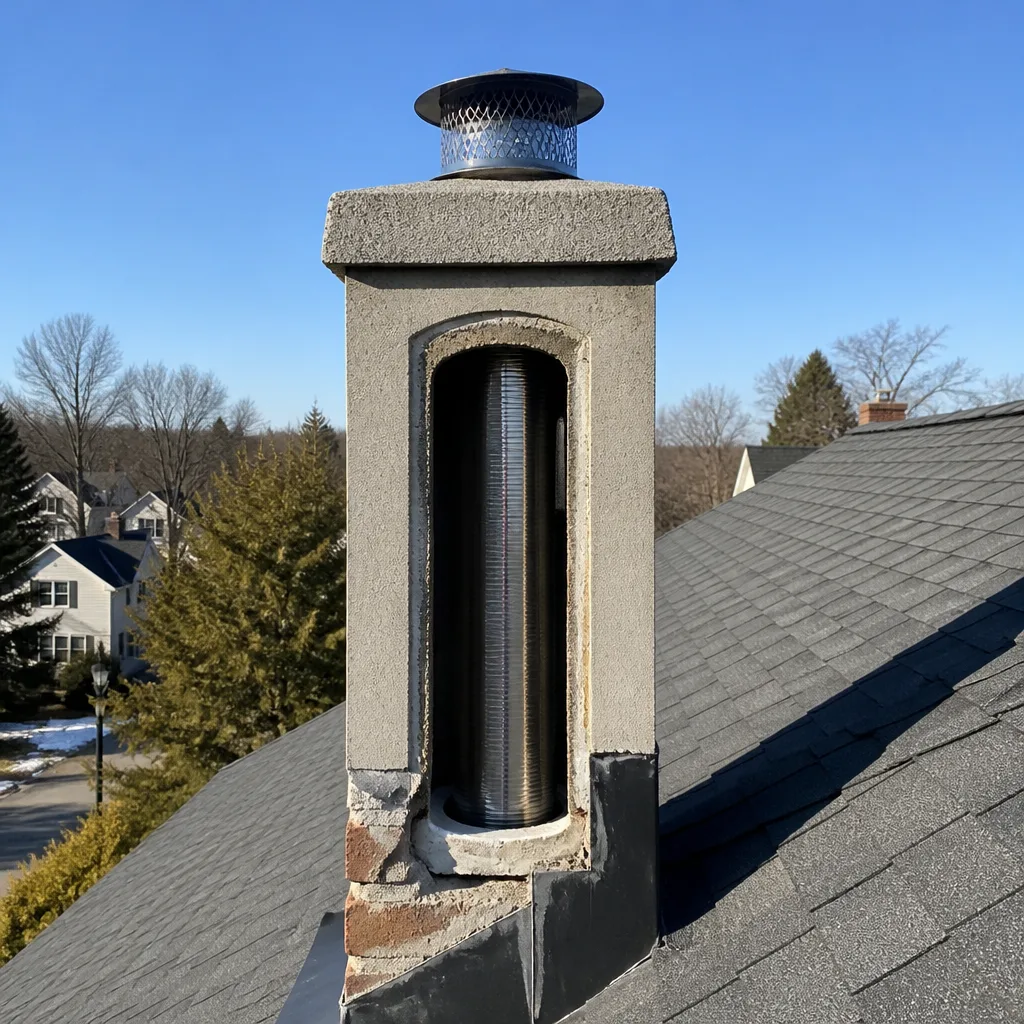 Flue relining
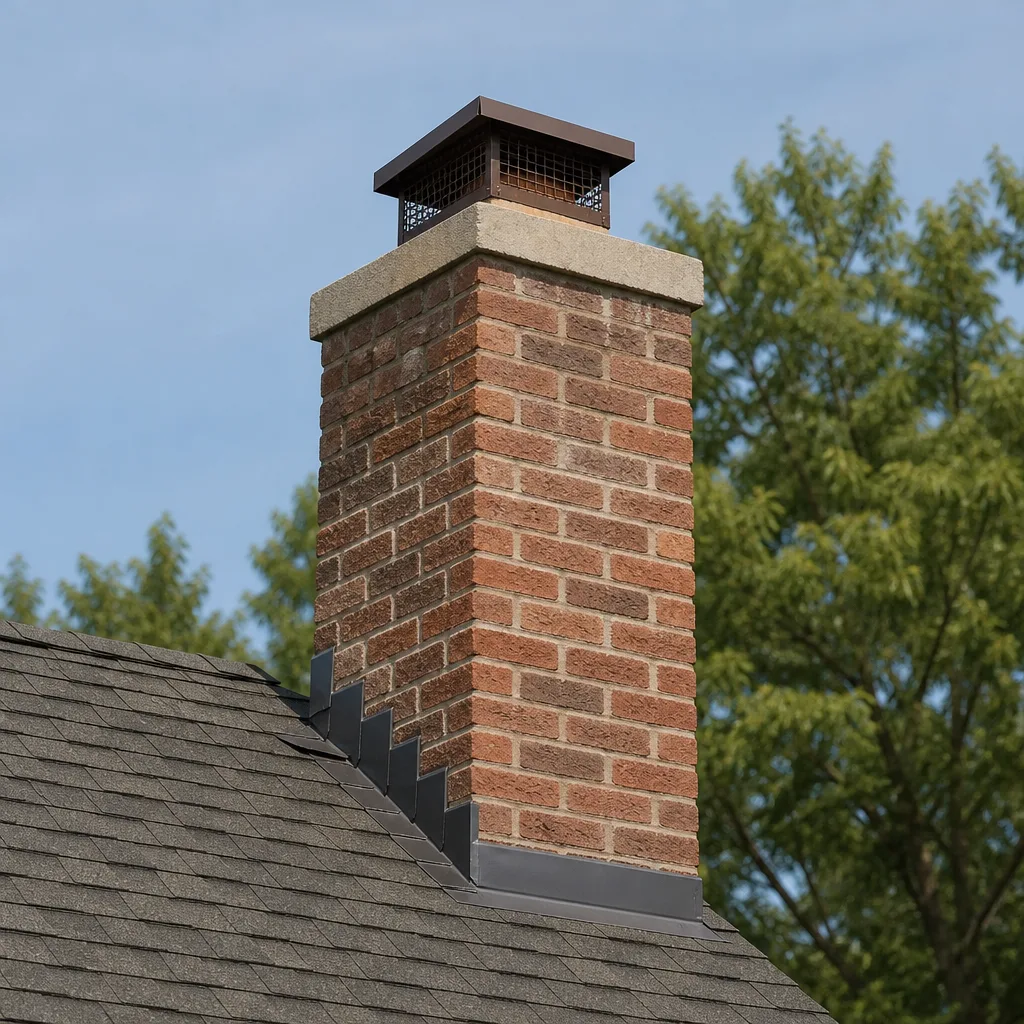 Masonry repair
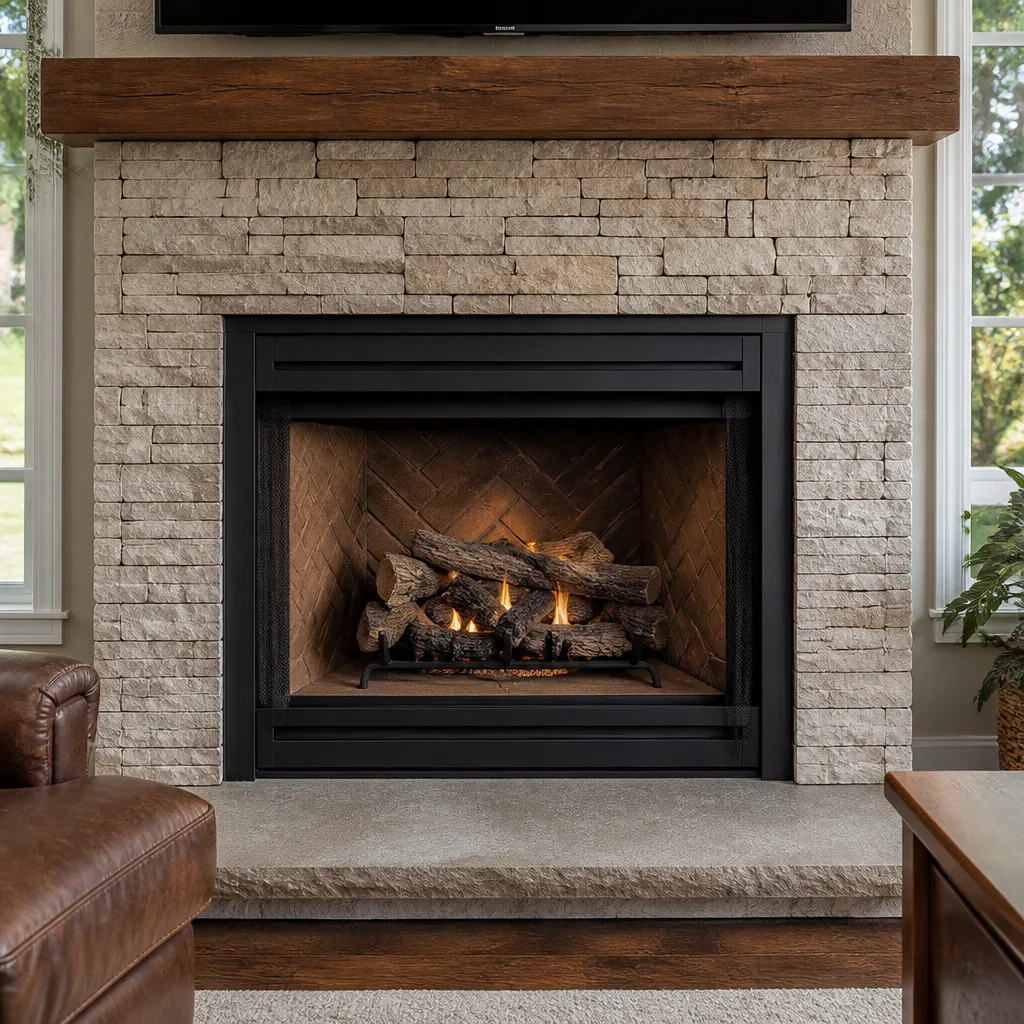 Gas fireplace service
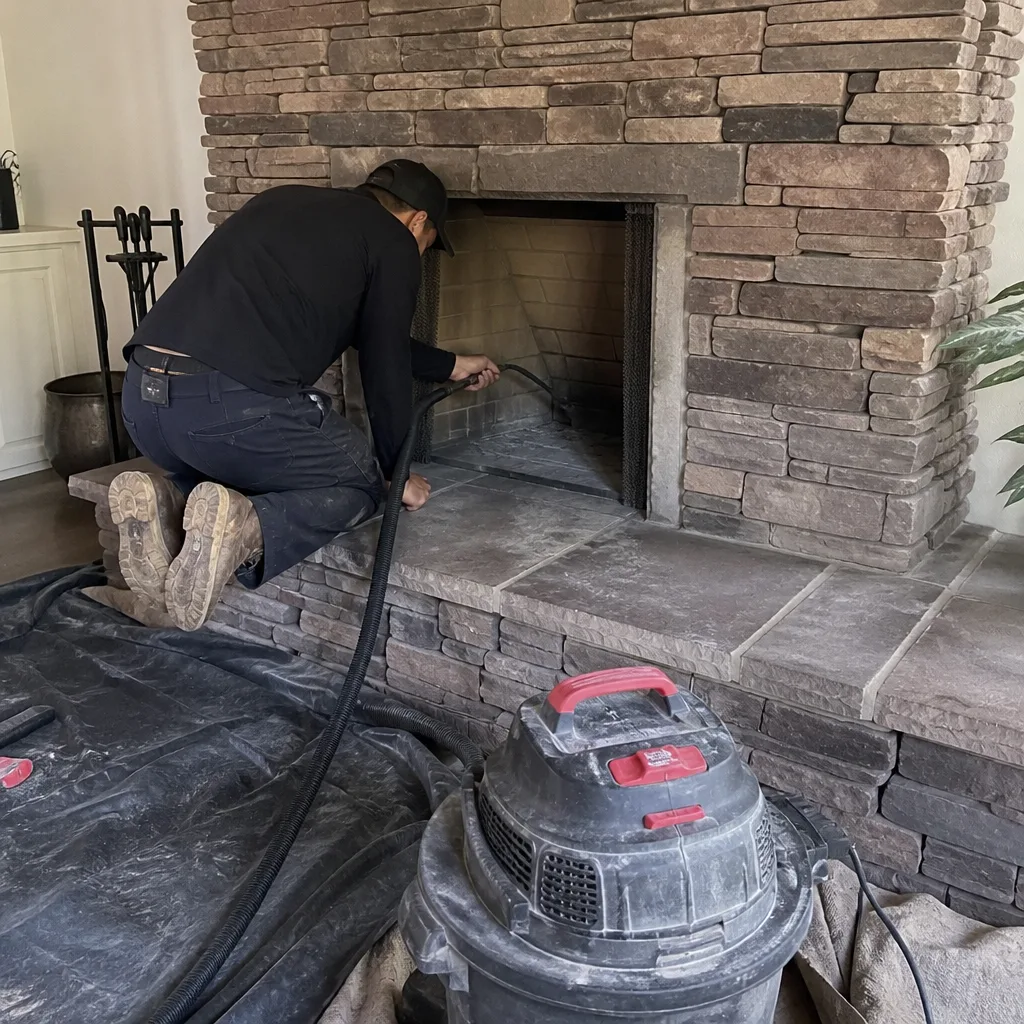
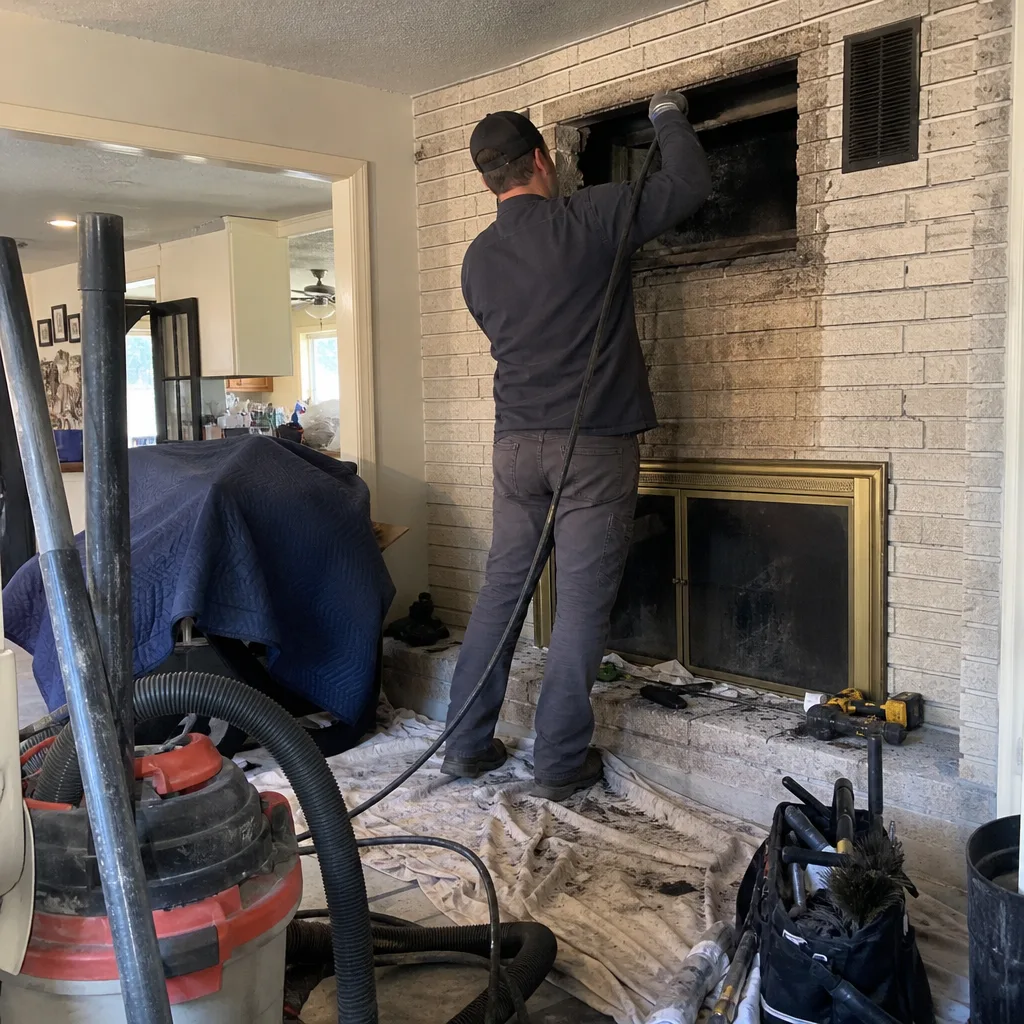
Level 1 sweep and inspection to the NFPA 211 annual standard - flue, crown, cap, and flashing checked and photographed
Chimney sweep logs do not sweep chimneys. They loosen some creosote - which then falls where a brush and vacuum still have to collect it.
Chimney Cleaning Emergency Preparedness Guide for Carmichael Homes
A chimney fire sounds like a low-frequency roar, like a jet engine starting up inside your wall. Most homeowners who’ve experienced one say they didn’t know what they were hearing for the first 30 seconds, and those seconds matter. This guide covers what actually happens during chimney emergencies in Carmichael, how to respond in the first two minutes, what to document afterward, and how to prepare your household before burning season starts. You’ll learn the difference between a slow-burning fire and a full-involvement event, how carbon monoxide sneaks into Carmichael homes through compromised venting, and why your insurance adjuster will ask for records you may not have kept.
Quick Answer
Chimney emergency preparedness for Carmichael homes means knowing the two emergency categories: active chimney fires, which require calling 911 immediately and closing the damper if you can do so safely, and carbon monoxide intrusion events, which require evacuation and professional venting inspection. Before burning season, every Carmichael household should have working CO detectors on each floor, a current chimney inspection report, and the phone number of a chimney specialist saved. Most emergencies are preventable with an annual sweep, and the homes that handle emergencies best are the ones that prepared in October, not in the middle of a February chimney fire.
Styles & brands we work with
- Sweep & inspection
- Caps & crowns
- Flue relining
- Masonry repair
- Gas fireplace service
Table of Contents
- What to Do During an Active Chimney Fire
- Slow-Burning vs. Fast-Burn Chimney Fires: Different Signs, Different Danger
- Carbon Monoxide Intrusion: The Venting Emergency Most Carmichael Homes Miss
- Post-Emergency Documentation: What to Record Before Remediation Begins
- Pre-Season Emergency Preparedness Checklist for Carmichael Homes
- How a Current Inspection Report Affects Your Insurance Claim
- Common Mistakes to Avoid
- When to Call a Professional
- Frequently Asked Questions
What to Do During an Active Chimney Fire
The protocol for an active chimney fire is counterintuitive in one specific way: you do not open the firebox door to check what’s happening. Opening that door feeds oxygen to the fire and can pull flames into the living space. Here’s the two-minute response sequence, in order:
- Call 911 first. An active chimney fire is a structure fire in progress. Carmichael fire crews respond to chimney fires throughout the winter months, and they’d rather arrive to find the fire already out than arrive late to find attic involvement.
- Close the damper if you can reach it safely. This cuts the primary oxygen supply feeding the chimney fire. If the damper handle is hot, if flames are visible near the firebox, or if you’d have to reach over the fire to access it, skip this step.
- Close the firebox doors or glass screen. This further starves the fire of air. Do not open them again.
- Evacuate everyone from the house. Wait outside for the fire department. Chimney fires can spread into the attic through cracked masonry or failed mortar joints without any visible warning from inside the living space.
- Do not use a hose or fire extinguisher on the firebox. Water on a hot firebrick liner can crack it instantly. A fire extinguisher aimed at the flame will buy you nothing if the fire is already in the flue above the damper.
After the fire is out, do not use the fireplace again until a full inspection has been completed. A chimney fire can crack flue tiles, warp the damper, and compromise the mortar structure. In Carmichael homes with older masonry chimneys, the flue tiles are often the structural weak point, and a chimney fire is frequently the event that reveals a crack that had been developing for years.
If you’re uncertain whether the noise you’re hearing is a chimney fire or a normal fire with strong draft, err on the side of calling 911. The Carmichael Fire Department would rather respond to a false alarm than a fully involved attic fire. Our Chimney Sweep in Carmichael page explains what a proper post-fire inspection covers.
Slow-Burning vs. Fast-Burn Chimney Fires: Different Signs, Different Danger
Not every chimney fire announces itself with a jet-engine roar. There are two distinct events, and they present differently, with different immediate dangers.
The Fast-Burn Chimney Fire
A fast-burn event happens when creosote deposits ignite with unrestricted airflow. The signs are loud and unmistakable:
- A low-frequency rumble or roar from the chimney, often compared to a freight train or jet engine
- Flames visible from the chimney top, sometimes shooting several feet above the cap
- Dense smoke from the chimney
- Intense heat radiating from the fireplace or chimney chase
- A hot, acrid smell in the room, even with the firebox door closed
This is a 911 call, no hesitation. The danger isn’t just the flue, it’s what surrounds it: Carmichael homes built in the 1960s and 1970s often have chimneys framed by wood studs, and a fast-burn fire can ignite those studs through conducted heat even without a visible flue breach.
The Slow-Burning Chimney Fire
A slow-burn event is quieter and more insidious. Creosote ignites but lacks the airflow to flare violently. Instead, it smolders at high temperature inside the flue for hours. The signs:
- No loud roar, just a faint crackling or hissing from the chimney
- Little or no visible change from the chimney top
- An unexplained smoky smell in rooms adjacent to the chimney, hours after the fire has burned down
- Flue tiles that show hairline cracks on the next inspection
A slow-burning fire does structural damage without announcing itself. Homeowners often discover the evidence months later, during a routine sweep, when the technician points out spalled flue tiles and glazed creosote – exactly the kind of damage covered in our Chimney Cleaning Warning Signs: A Carmichael Homeowner’s Reference Guide. In Carmichael, where many wood-burning fireplaces see heavy use from October through March, a slow-burn event is more common than most homeowners realize. The takeaway: any unexplained smell, sound, or smoke pattern from your chimney warrants a professional look, even if there was no dramatic event.
Carbon Monoxide Intrusion: The Venting Emergency Most Carmichael Homes Miss
The second category of chimney emergency never involves flames. Carbon monoxide (CO) intrusion happens when combustion gases that should exit through the flue are instead pulled back into the living space. It’s odorless, colorless, and the symptoms mimic the flu: headache, nausea, dizziness, confusion. The scenarios that cause it in Carmichael homes are specific:
Blocked Flue
A flue blocked by a bird nest, squirrel nest, or accumulated creosote prevents combustion gases from escaping. The gases back up and seep through any available gap: a cracked flue tile, a warped damper, or a poorly sealed connection between the firebox and the flue. Carmichael’s mature trees and older housing stock create ideal conditions for animal intrusion into chimneys without caps.
Cracked Liner
A cracked flue liner doesn’t just expose the masonry to heat; it creates a path for CO to enter wall cavities and, from there, living spaces. This is the scenario that most often defeats a single CO detector: the gas enters the bedroom through the wall, not through the hallway where the detector sits.
Cold-Start Backdraft
On cold Carmichael mornings, a cold chimney column can create a reverse draft: the column of cold air in the flue is heavier than the warm air in the house, so when you light a fire, smoke spills into the room instead of rising up the chimney. This is most common in fireplaces without glass doors, in homes with tight building envelopes, and during the first fire of the season. The fix is often simple: pre-warming the flue with a rolled newspaper torch held near the damper for 60 seconds before lighting the main fire. But if backdrafting happens repeatedly, the cause is usually structural: a flue that’s undersized for the firebox, a damper that doesn’t seat properly, or negative pressure from competing exhaust fans.
The CO detector is your last line of defense, not your first. In Carmichael homes with wood-burning fireplaces, a CO detector on each sleeping floor is non-negotiable, and it should be replaced every 7 years. If a CO alarm triggers and you can’t identify the source, evacuate and call the fire department. Do not open windows and “air it out” and assume the problem is solved; the source is still there.
Post-Emergency Documentation: What to Record Before Remediation Begins
After a chimney fire or CO event, the documentation you create in the first 24 hours matters more than anything you do afterward. Insurance adjusters and remediation contractors both need the same evidence, and once remediation starts, some of that evidence disappears.
- Photograph everything before anyone touches it. The firebox interior, the chimney exterior, the area around the hearth, and any visible smoke staining on walls or ceilings. Use your phone, but back up the photos to a cloud service immediately; a phone damage event after a house fire is a pattern, not a coincidence.
- Write down the timeline. When the fire started, what you heard, what you did, when 911 was called, when the fire department arrived, what they found, and what they told you. Does this need to be a formal document? No. A notes-app file with timestamps works. Write it while the details are fresh, within 24 hours.
- Request the fire department’s incident report. Carmichael Fire Department incident reports are public records and will document the event from the responding crew’s perspective. Your insurance company will request this. Ask for it early so you’re not waiting when the adjuster asks.
- Do not clean or repair anything before the adjuster sees it. Even a quick surface wipe of soot can remove evidence of how far the smoke traveled. If you must clean for safety reasons, photograph first, and tell the adjuster what you did.
- Preserve your last chimney inspection report. If you have a current inspection showing the flue was in good condition before the event, that’s powerful evidence to counter any claim that the damage was pre-existing. Carmichael homeowners who skip annual sweeps learn this the hard way: the insurance company will ask when the chimney was last inspected, and “I don’t remember” is not a good answer.
One more note: if the emergency involved a chimney fire and your cap, crown, or flue was damaged, the repair specification matters for your claim. The adjuster will want to know whether the repair uses professional-grade materials. We specify repairs with products from Olympia Chimney and Copperfield, the same brands used by chimney contractors nationwide. A detailed, brand-specific repair estimate is easier for the adjuster to approve than a vague “chimney repair” line item.
Pre-Season Emergency Preparedness Checklist for Carmichael Homes
October is the month to prepare. By the time the first cold snap hits Carmichael, you should have already completed this list. Here’s the full pre-season checklist:
- Schedule your annual chimney sweep. A swept chimney is a safer chimney. Creosote is the fuel for chimney fires, and a sweep removes it. If you haven’t scheduled your annual sweep yet, do it before the burning season starts. Our Chimney Sweep Carmichael home page has details on what the service includes.
- Test your CO detectors. Press the test button on every unit. If any unit is more than 7 years old, replace it. The date code is printed on the back. If you have a wood-burning fireplace and no CO detector, buy one today.
- Know where your fire extinguisher is. It should be accessible from the fireplace room but not directly next to the fireplace, because you don’t want to reach through fire to get to it. Check the pressure gauge.
- Consider a chimney fire suppressant. Products like Chimfex are flare-style sticks you light and drop into the firebox to starve a chimney fire of oxygen. They’re a recognized last-ditch measure, not a substitute for calling 911, but having one in the house is cheap insurance.
- Save the phone number of your chimney specialist. After 911, the second call you’ll make is to a chimney professional. You don’t want to be searching for that number on the worst night of your burning season. Call (833) 593-4469 to schedule a sweep or inspection.
- Review your homeowner’s insurance policy. Know your deductible, know what’s covered, and know whether you have a separate rider for chimney or fire damage. Some policies exclude damage from creosote fires if the chimney wasn’t maintained; don’t find that out in February.
- Clear the area around the hearth. Keep rugs, furniture, firewood, and anything combustible at least 3 feet from the firebox opening. This is the simplest fire-prevention move in the book, and it costs nothing.
How a Current Inspection Report Affects Your Insurance Claim
Insurance companies don’t like paying chimney fire claims. They like them even less when the homeowner can’t demonstrate maintenance. Here’s the reality of how it plays out in Carmichael:
After a chimney fire, the adjuster will ask for documentation of the last professional inspection and sweep. If you have a current report showing the flue was clean and in repairable condition, the claim moves forward normally. If you don’t, the company may classify the damage as neglect, which is often excluded or subject to higher deductibles. This is not a hypothetical: creosote fires are among the most commonly denied or underpaid claims in home insurance, precisely because lack of maintenance is so easy to document.
A current inspection report also helps with the remediation estimate. If the report notes that the flue tiles were intact before the fire, the adjuster knows the cracks were caused by the event. Without a report, the adjuster can argue the cracks were pre-existing, and the settlement shrinks accordingly.
The bottom line: an annual sweep is not just fire prevention. It’s insurance documentation. The $200-400 you spend on a sweep in Carmichael is also a paper trail that protects you for the next 12 months. We’ve helped homeowners through the post-fire inspection process, and the difference between a smooth claim and a contested one is almost always whether the homeowner can produce a recent report.
Common Mistakes to Avoid
- Opening the firebox door during a chimney fire. This is the mistake that turns a contained flue fire into a room-and-content fire. The oxygen rush feeds the fire and can force flames into the living space. Keep the door closed, keep the damper closed if possible, and get everyone outside.
- Pouring water on a hot firebox. The thermal shock can crack the firebrick liner instantly, and the steam can carry burning creosote into the room. Water and active chimney fires do not mix.
- Assuming the danger passed because the noise stopped. A chimney fire that “went out on its own” may still have left damaged flue tiles and heated framing. We’ve inspected Carmichael chimneys where a slow-burn event caused structural damage the homeowner never noticed until the next sweep revealed it.
- Using the fireplace again the next day after a minor event. A fire in the flue, even a small one, warrants a professional inspection before the next burn. We regularly see homeowners who light up again after a small event and then deal with a much bigger problem.
- Treating CO alarms as nuisances. If your CO detector triggers and then stops when you open a window, you don’t have a detector problem; you have a venting problem. The gas source is still there. Evacuate, call the fire department, and get the chimney inspected.
- Focusing only on the chimney and forgetting the dryer vent. Dryer vents are a leading cause of residential structure fires, and many Carmichael homes have longer-than-recommended dryer vent runs. A clogged dryer vent is an exhaust-system emergency that’s as real as a chimney fire. Our Dryer Vent Cleaning in Carmichael page covers this in detail.
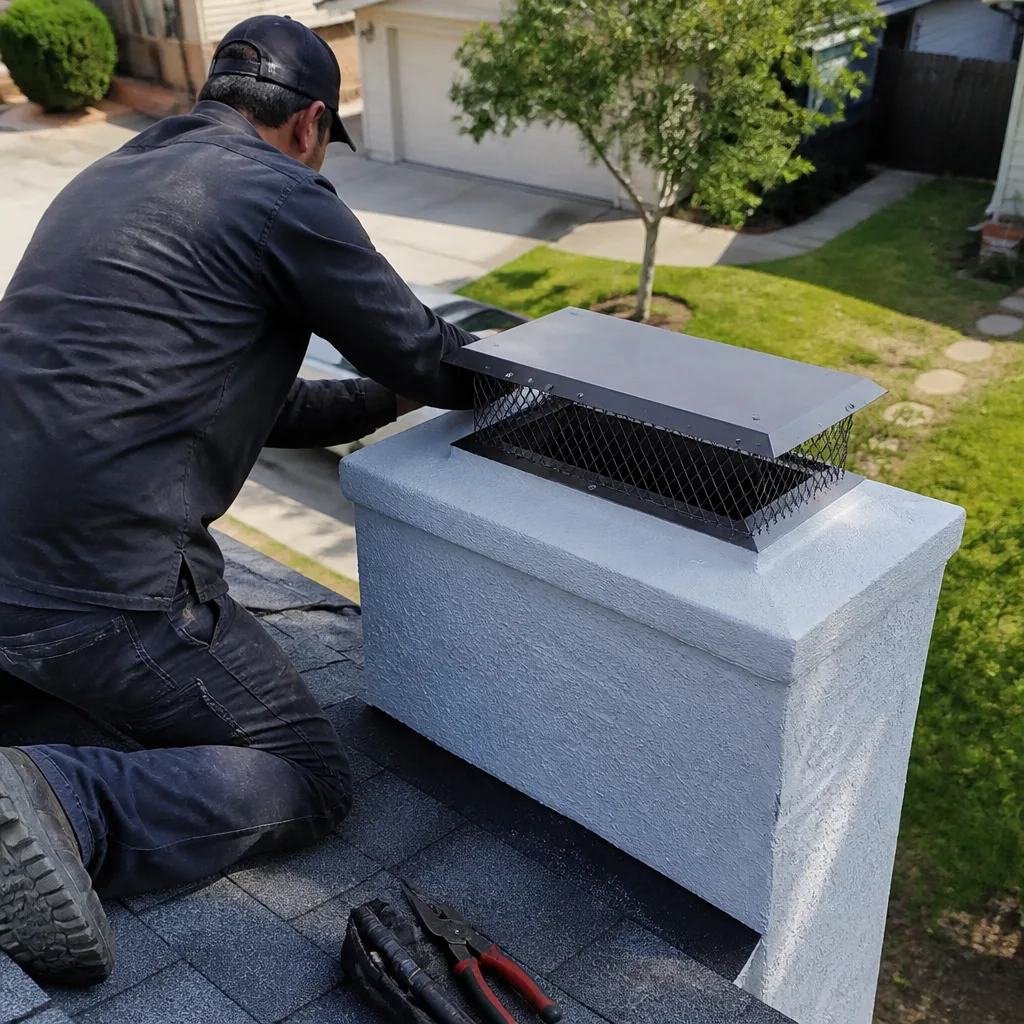
- Assuming a chimney cap is optional. In Carmichael, birds and squirrels build nests in uncapped chimneys from April through September. A Gelco cap or similar quality cap prevents both animal intrusion and rain damage, and it’s the single most cost-effective preventive measure you can add to your chimney.
When to Call a Professional
Call a chimney professional after any chimney fire, after any CO alarm event that can’t be attributed to a known source, if you see smoke spilling into the room during start-up, if you notice a persistent smoky smell in rooms adjacent to the chimney, or if your fireplace has gone more than 12 months without an inspection. Call Chimney Repair in Carmichael at (833) 593-4469 for post-fire inspection and repair specifications. Chimney Sweep Carmichael offers free estimates in Carmichael, and our repair work uses professional-grade materials from brands like Olympia Chimney and Copperfield, the same products contractors specify for durable, code-compliant repairs.
Frequently Asked Questions
A standard chimney sweep in Carmichael typically costs between $200 and $400, depending on the condition of the flue, the amount of creosote buildup, and whether the chimney has been swept recently. Prices run higher when a Level 2 inspection is needed or when the dryer vent is added to the same visit. Call (833) 593-4469 for a free estimate based on your specific chimney.
The National Fire Protection Association recommends a sweep when creosote buildup reaches 1/8 inch, which for most Carmichael homes with regular wood-burning use means once per year. Homes that burn only occasional fires may be able to go 18 months, and homes that burn softwoods or green wood may need a sweep after every cord. The safest approach is an annual inspection, followed by a sweep when the technician’s creosote measurement calls for it.
Not always, but it’s common. A chimney fire can crack flue tiles, and cracked tiles mean combustion gases can escape into wall cavities. The technician will run a camera inspection and show you the footage before recommending a reline. In some cases, when the damage is limited to surface spalling, a HeatShield resurfacing can restore the flue without a full reline. You should never accept a reline recommendation without seeing the camera evidence.
Evacuate the house immediately and call 911 from outside. Do not open windows and assume the problem is solved, because the CO source is still active. Once the fire department clears the house, call a chimney professional to inspect the venting system before you use the fireplace again. CO alarms that trigger during fireplace use almost always indicate a venting problem that needs professional diagnosis.
No. Not until a full inspection has been completed and the chimney has been declared safe. Using the fireplace before inspection risks a second, larger fire in a compromised flue. After a chimney fire, the flue needs to be checked for cracks, the damper needs to be checked for warping, and the masonry structure needs to be evaluated. Call (833) 593-4469 to schedule a post-fire inspection.
A sweep is the physical removal of creosote and soot from the flue. An inspection is a condition assessment of the entire chimney system, including the flue liner, damper, crown, cap, and masonry. A Level 1 inspection is done as part of an annual sweep when nothing has changed. A Level 2 inspection uses a camera and is required after a chimney fire, a change in fuel type, or a real estate transaction. Most sweeps include a basic inspection, but a camera inspection is usually a separate service.
The Bottom Line
Chimney emergencies in Carmichael are preventable in most cases, and survivable in the rest. The homes that fare best are the ones that got their annual sweep in October, tested their CO detectors, saved their chimney professional’s phone number, and knew what to do during the first two minutes of an active chimney fire. The homes that fare worst are the ones that improvised: opening the firebox door to look, pouring water on hot brick, using the fireplace again after a minor event, and then trying to document an insurance claim with no inspection history. The difference between these two outcomes is preparation that costs a few hundred dollars and takes one afternoon each year. For more guides & resources on keeping your Carmichael home safe, explore our blog.
Written by the team at Chimney Sweep Carmichael, serving Carmichael since 2012.
See the difference
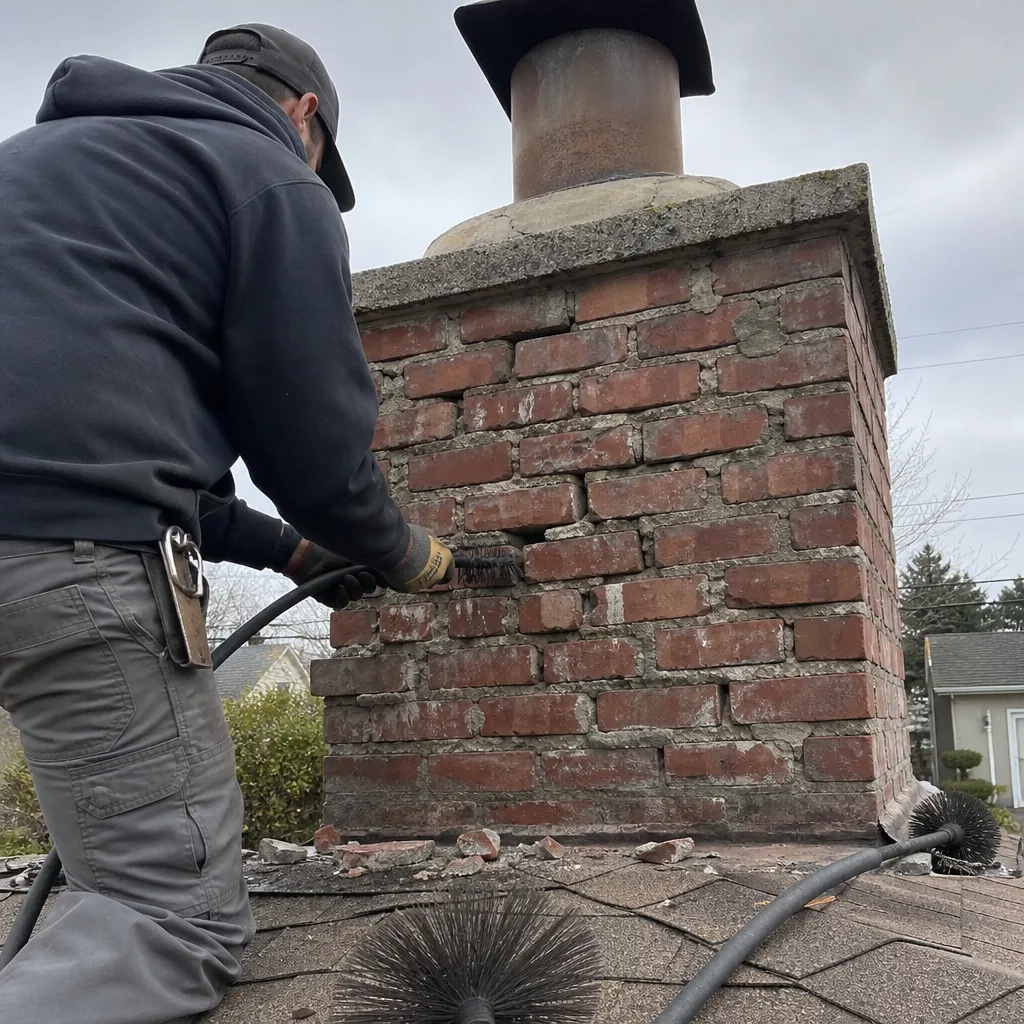 Before
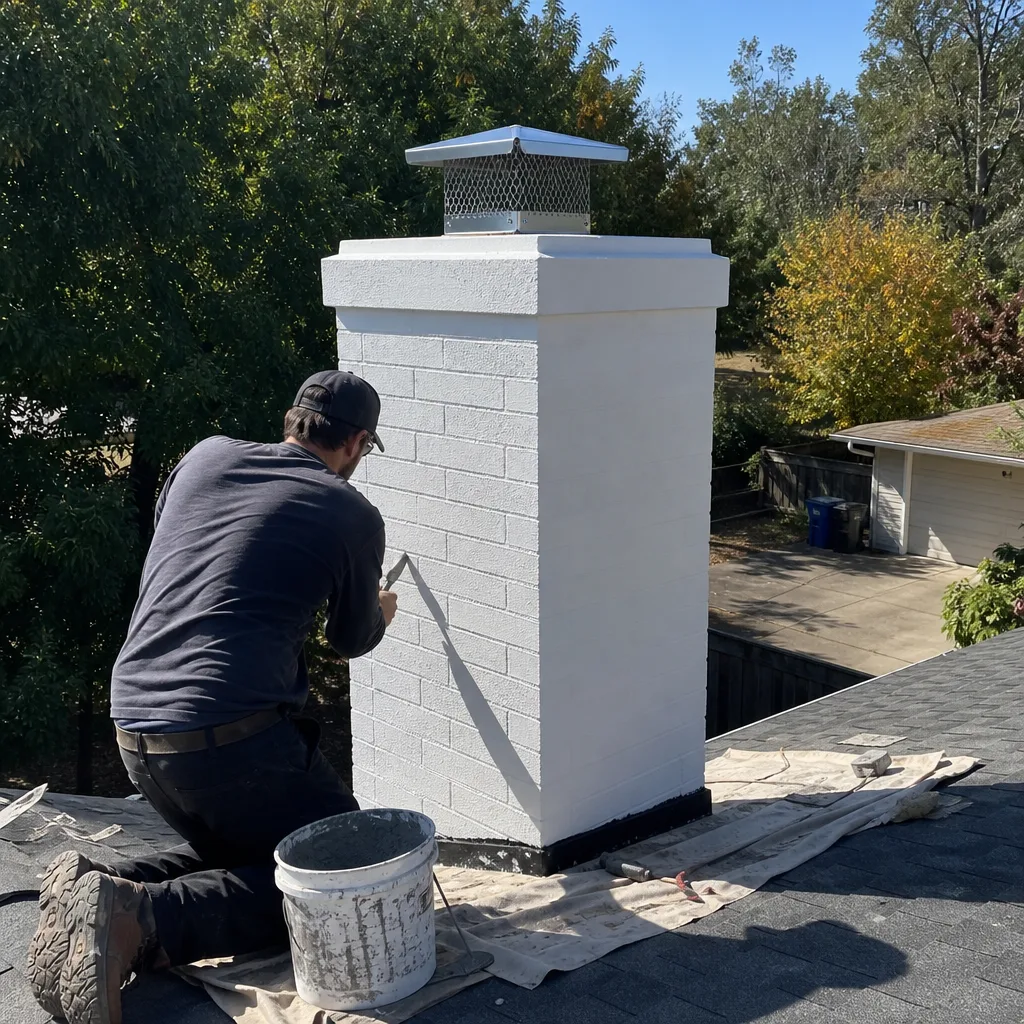 After
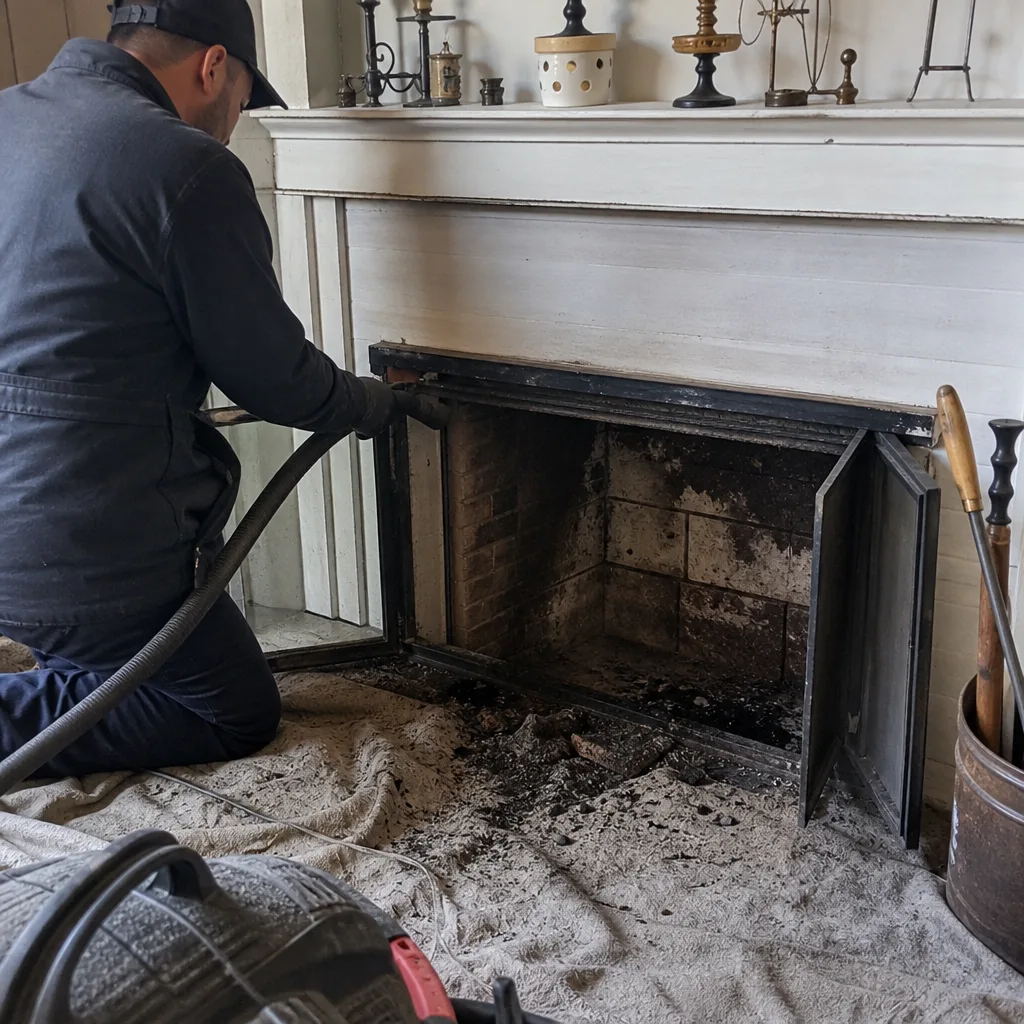 Before
 After
 Before
 After