
Last updated November 3, 2026
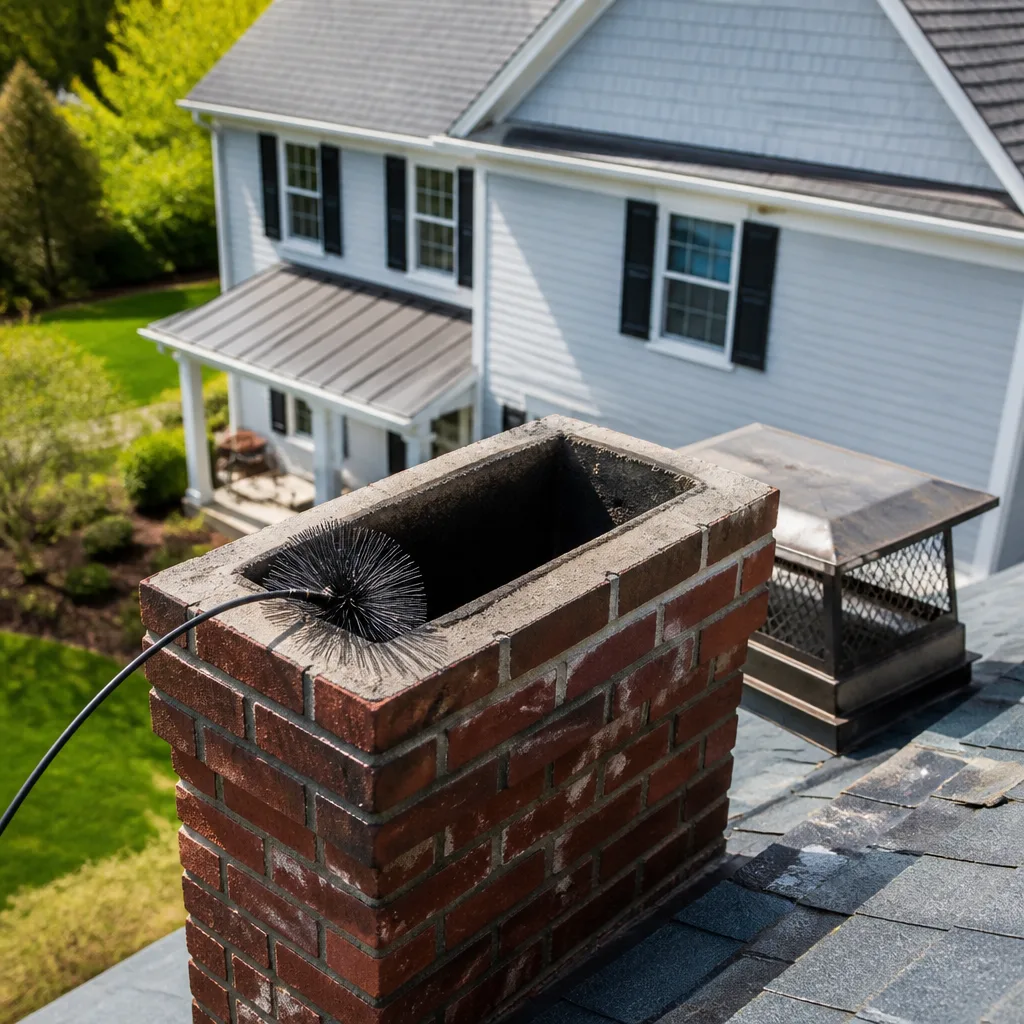 Sweep & inspection
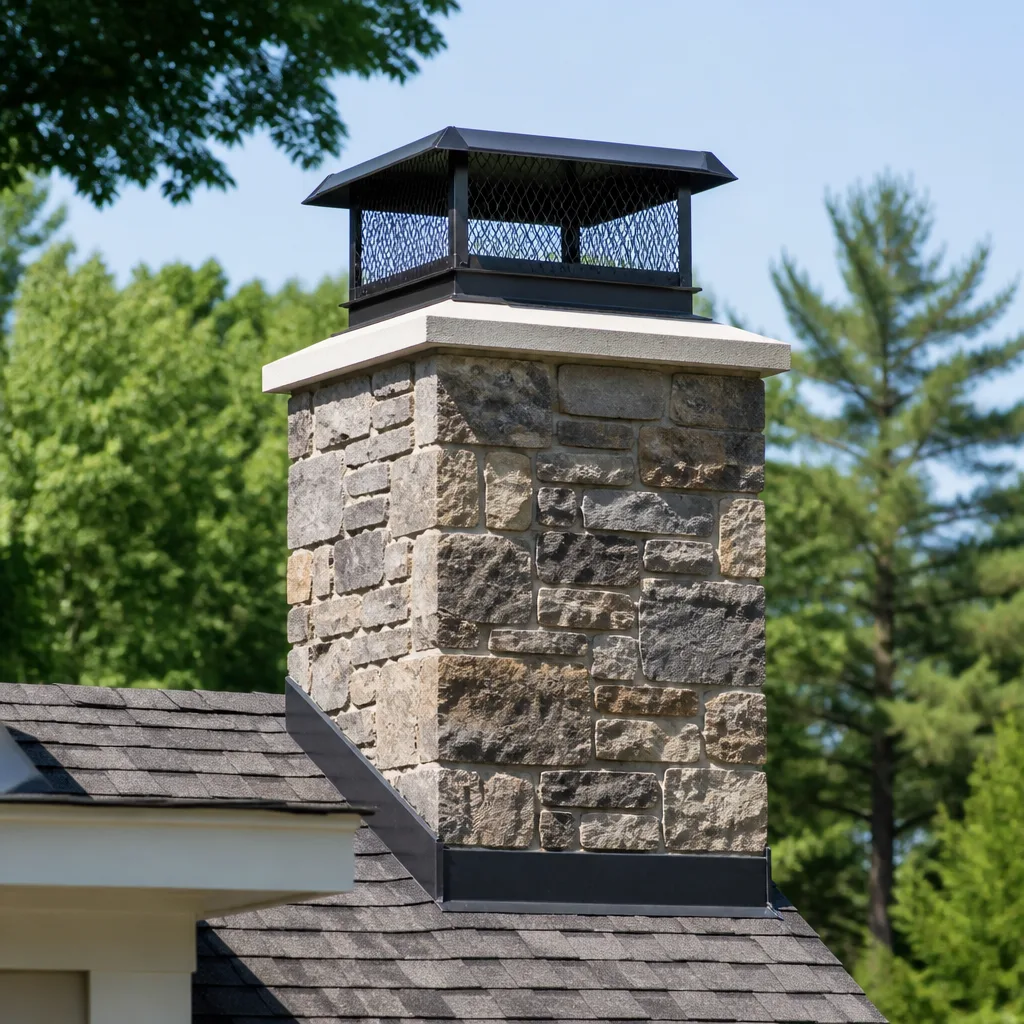 Caps & crowns
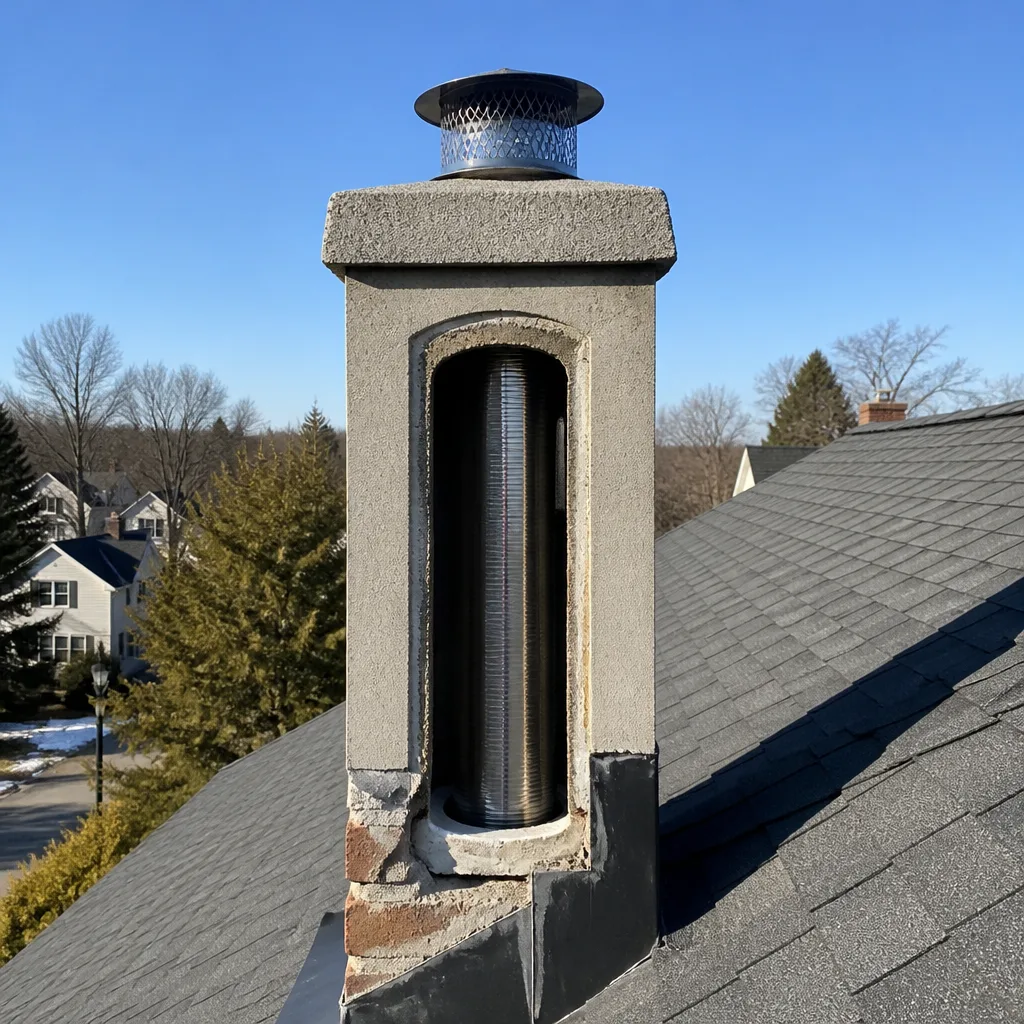 Flue relining
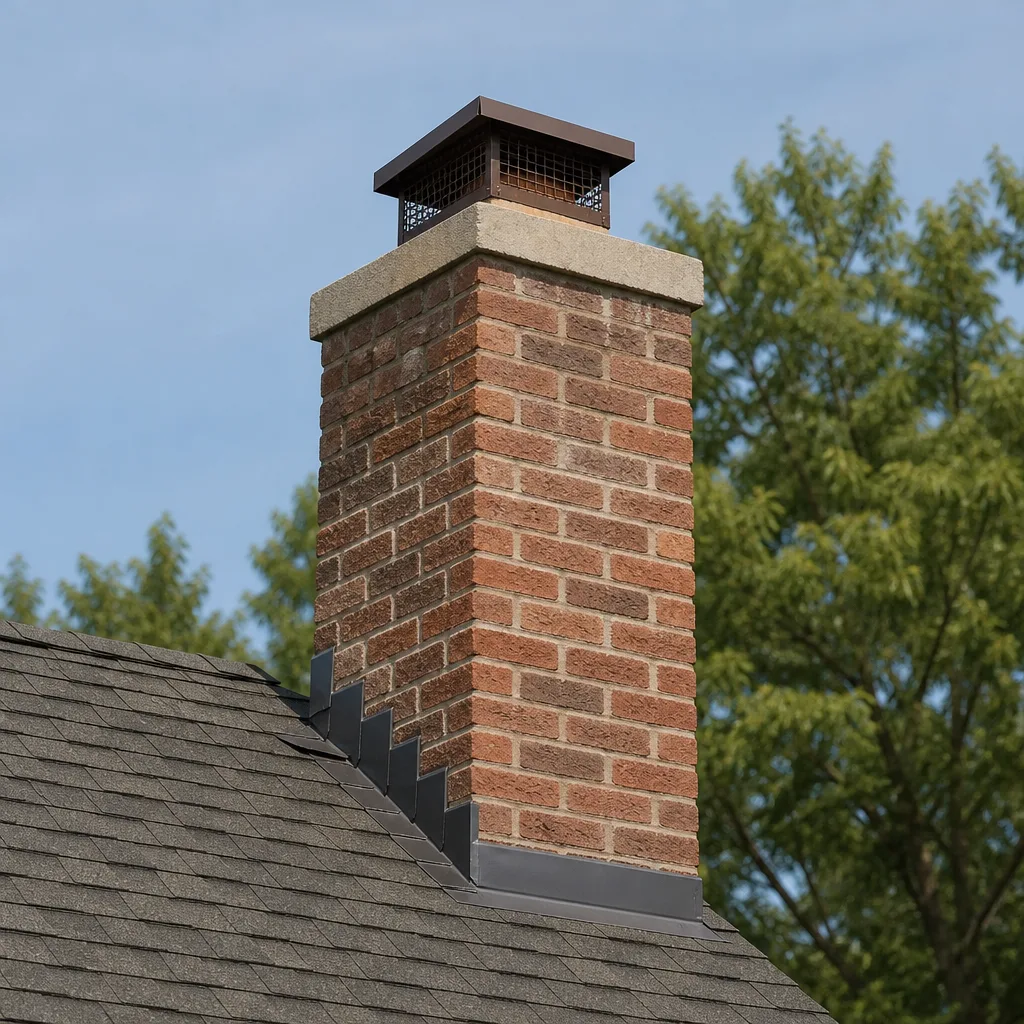 Masonry repair
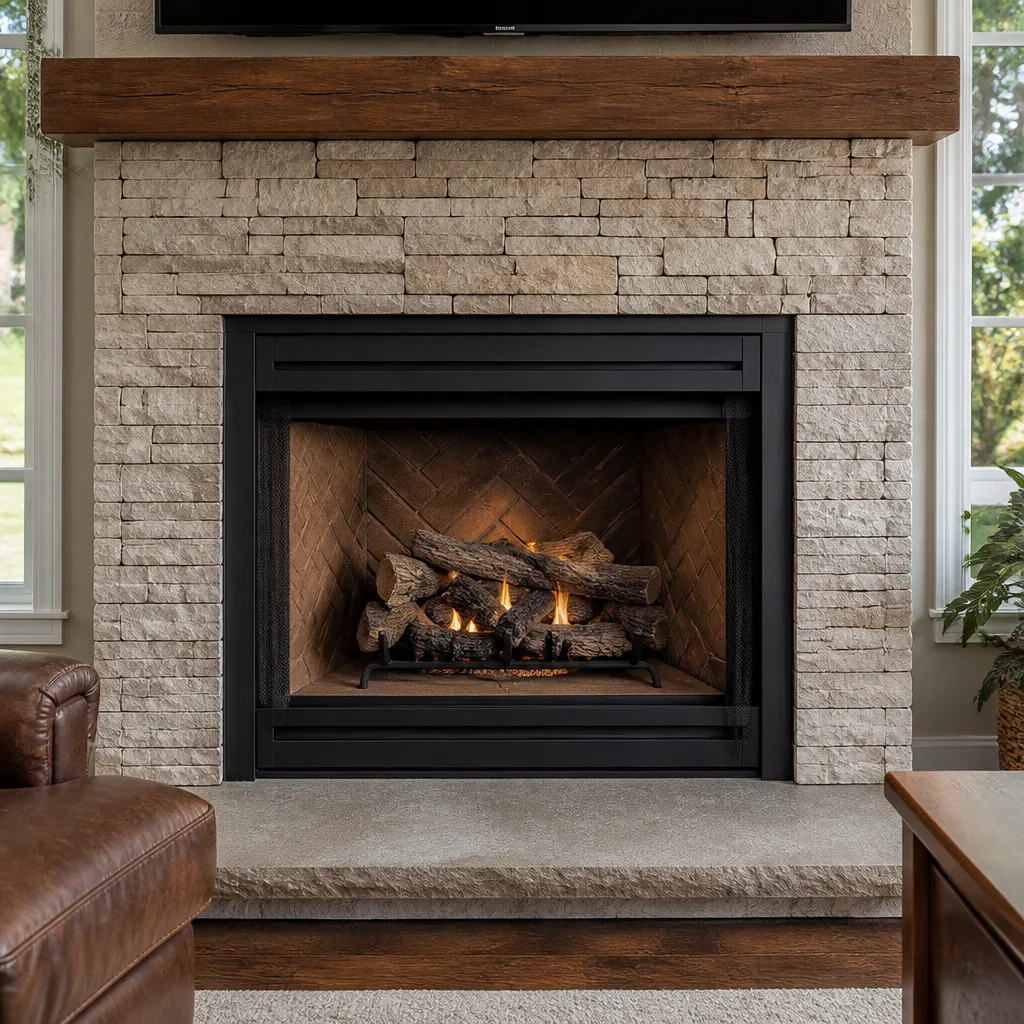 Gas fireplace service
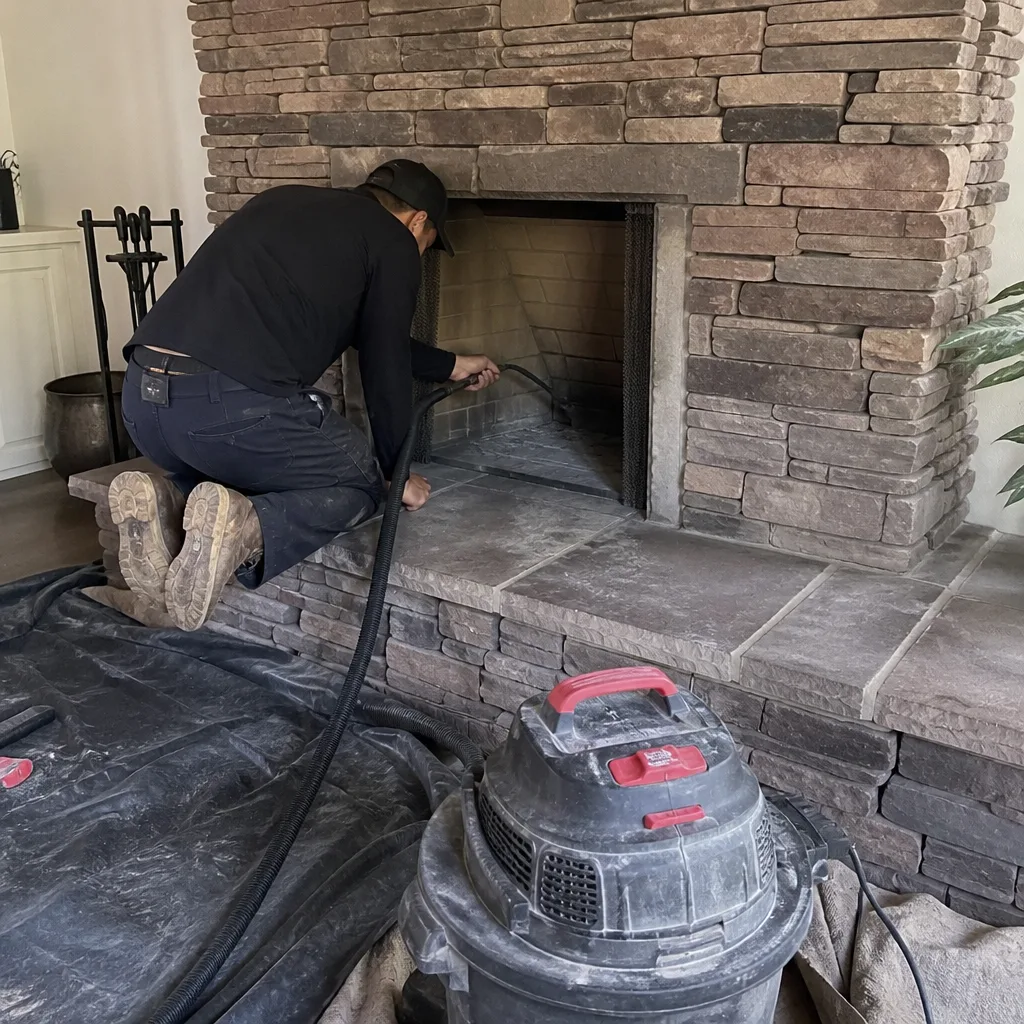
Level 1 sweep and inspection to the NFPA 211 annual standard - flue, crown, cap, and flashing checked and photographed
Chimney sweep logs do not sweep chimneys. They loosen some creosote - which then falls where a brush and vacuum still have to collect it.
The Complete Chimney Sweep Guide for Carmichael Homeowners
Here’s a number that should get your attention: Sacramento Metropolitan Air Quality Management District (SMAQMD) burn restrictions shut down residential wood burning roughly 30 days each winter in the Sacramento Valley. For Carmichael homeowners, that doesn’t mean fewer fires. It means the same seasonal burning gets compressed into shorter, often hotter windows. Hotter, more frequent fires in a compressed period change how creosote forms in your flue. This guide – along with our The Complete Guide to Chimney Cleaning in Carmichael – explains what that means for your chimney, your sweep schedule, and your repair budget. You’ll learn how Carmichael’s dominant burn woods behave differently from what national chimney guides assume, what a properly specified inspection actually covers, and how to read a sweep’s report without getting sold work you don’t need.
Styles & brands we work with
- Sweep & inspection
- Caps & crowns
- Flue relining
- Masonry repair
- Gas fireplace service
Quick Answer
Chimney Sweep services in Carmichael, CA typically cost $180 to $340 for a standard Level I inspection and cleaning, and should be scheduled annually for wood-burning fireplaces. Carmichael homeowners who burn valley oak and almond during SMAQMD-restricted winters often accumulate Stage 2 creosote faster than national guidelines anticipate, which makes annual sweeping a minimum rather than a best practice. Homes built in Carmichael’s 1970s to 1990s tract developments frequently have prefabricated chimney systems that require different inspection protocols than the older masonry chimneys found in neighborhoods like Carmichael Colony.
Table of Contents
- Why Carmichael’s Burn Woods Change Your Sweep Schedule
- How SMAQMD Burn Restrictions Affect Your Flue
- What a Specification-Grade Level II Inspection Actually Covers
- Chimney Types in Carmichael Housing Stock: 1970s – 1990s Tract Homes vs. Older Masonry
- What Does a Chimney Sweep Cost in Carmichael?
- How to Read a Sweep’s Written Report Without Getting Upsold
- The Dryer Vent Connection: Why One Provider Should Inspect Both
- Common Mistakes to Avoid
- When to Call a Professional
- Frequently Asked Questions
- The Bottom Line
Why Carmichael’s Burn Woods Change Your Sweep Schedule
National chimney guides tend to treat firewood as a single category. They’ll tell you to burn seasoned hardwood and sweep once a year. That advice is directionally correct but incomplete for Carmichael. What you burn here is different from what someone burns in New England or the Pacific Northwest, and those differences matter.
Carmichael sits in the Sacramento Valley, where valley oak and almond are the dominant burn woods. Both are dense hardwoods with high BTU output, which is good for heat. But here’s what most guides don’t tell you: valley oak and almond produce a creosote profile that leans toward Stage 2 creosote faster than the softwoods more common in colder, wetter climates. Stage 2 creosote is the flaky, tar-like deposit that forms when smoke condenses on flue walls that aren’t hot enough to carry moisture all the way out. It’s drier than Stage 1 soot but far harder to remove than the powdery Stage 1 deposits, and it’s the stage where chimney fires become a real possibility.
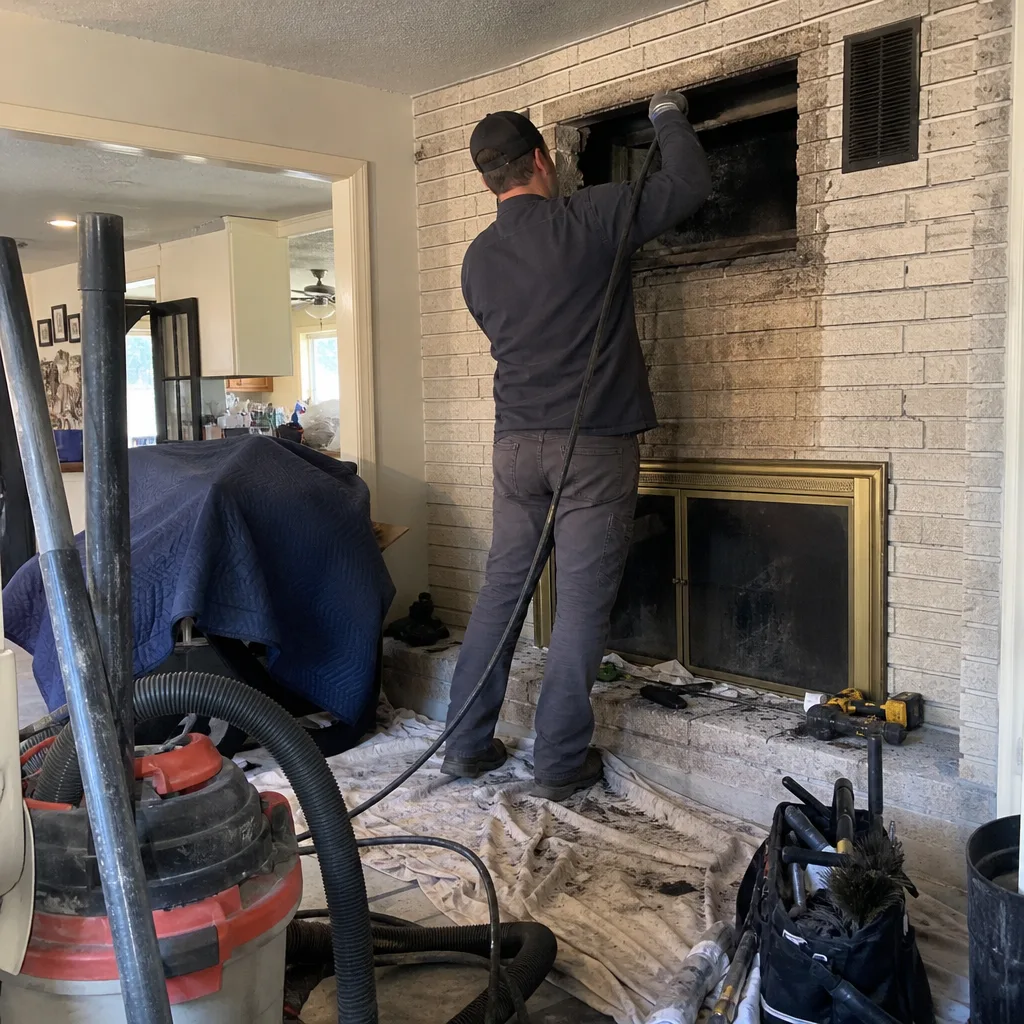
Why does this happen with valley hardwoods? Dense wood burns hot, but it also contains more resins and minerals than lighter hardwoods like birch or maple. When a Carmichael homeowner burns a hot oak fire, the flue temperature climbs quickly. When the fire dies down, the flue cools. That temperature swing causes rapid condensation of unburned wood gases on the flue walls. The result is a glassy or flaky Stage 2 deposit that a standard wire brush struggles to remove and that a rotary brush with harder nylon or steel heads handles far better.
In our experience, Carmichael chimneys that see regular oak and almond burning often show Stage 2 creosote at the twelve-month mark in volumes that a softwood-burning household wouldn’t see for two or three years. That changes the math on sweep frequency. If you burn valley oak or almond, annual sweeping is the floor, not the ceiling. Homes that burn multiple cords per season may need a mid-season check, especially after a stretch of unrestricted burn days when the fireplace gets used heavily.
How SMAQMD Burn Restrictions Affect Your Flue
The Sacramento Metropolitan Air Quality Management District issues mandatory no-burn days during the winter months, typically from November through February. When fine particulate matter (PM2.5) is forecast to exceed federal health standards, residential wood burning is prohibited unless the household has no other source of heat. In an average season, that’s roughly 30 restricted days.
For Carmichael homeowners, a no-burn day doesn’t reduce your total desire for a fire. It defers it. You wait out the restriction, then burn more intensely on the days that are allowed. That compression effect is exactly what accelerates creosote formation. Instead of a steady rhythm of small fires spread across a season, you get fewer, larger, hotter burns packed into allowable windows. The flue cycles through bigger temperature swings, and each cycle deposits a new layer of creosote on top of the last.
There’s a second effect worth understanding. On no-burn days, some Carmichael homeowners switch to manufactured fire logs or compressed wood bricks, which are often still permitted depending on the specific restriction language. These products burn differently than cordwood. Many compressed logs produce lower moisture content and higher heat output, which sounds good but can push flue temperatures higher than a masonry chimney was designed for. If you’re mixing cordwood and manufactured logs across a season, you’re asking your flue to handle two different thermal profiles. That’s not a reason to avoid compressed logs, but it is a reason to make sure your sweep inspects the flue for heat-related cracking, not just creosote volume.
Practical takeaway: schedule your sweep in late spring or early summer, after the burn season ends. For more guides & resources on timing and maintenance, see our blog. You’ll get a clear picture of what accumulated during those compressed burn windows, and you’ll avoid the fall rush when every Carmichael homeowner remembers their chimney at once.
What a Specification-Grade Level II Inspection Actually Covers
When most homeowners hear “chimney sweep,” they picture a brush, a vacuum, and a quick look up the flue. That’s a Level I inspection, and it’s appropriate for a chimney that’s been regularly maintained and hasn’t changed use. But Carmichael homes that have gone two or more seasons without a sweep, or that are changing fuel type, or that have been through a chimney fire, need something more thorough. That’s where a specification-grade Level II inspection comes in.
A proper Level II inspection includes everything in Level I, plus:
- Video scanning of the entire flue interior. This is the single biggest differentiator between a professional sweep and a generalist handyman. A camera reveals what a brush and flashlight cannot: hairline cracks in clay tile liners, separated flue tile joints, hidden creosote pockets behind offsets, and damage to prefabricated chimney components.
- Accessible attic, crawlspace, and roof inspection. This checks the chimney structure where it passes through the home, looking for clearance violations, water intrusion, and structural issues that never show up in a living-room visual.
- Clearance-to-combustibles verification. Building code requires specific distances between chimney components and framing, insulation, and roofing materials. Violations are common in Carmichael homes where a previous owner did a DIY repair or a non-specialist contractor cut corners.
- Damage assessment after weather events, earthquakes, or chimney fires. The Sacramento Valley gets its share of wind storms and the occasional seismic rumble. If you’ve had either, a Level II inspection is the only way to know whether your flue is still intact.
- Condition evaluation of all accessible components: crown, cap, flashing, damper, firebox, smoke chamber, and liner.
What separates a specification-grade inspection from a quick camera-and-brush job is documentation. You should receive a written report with photos or video stills showing exactly what the technician saw. If a repair is recommended, the report should explain why, with visual evidence you can look at yourself. We specify the repair before we sell it. That means you see the crack, the gap, or the deteriorated section in the image, not just a line item on an estimate.
Chimney Types in Carmichael Housing Stock: 1970s – 1990s Tract Homes vs. Older Masonry
Carmichael’s housing stock spans several decades, and the chimney in a 1985 tract home on the northern edge of town is a very different animal from the one in a 1950s home near Carmichael Park. Knowing which type you have changes how it’s serviced, what fails, and what repairs cost.
1970s – 1990s tract homes typically have factory-built, or prefabricated, chimney systems. These consist of a metal firebox, a double- or triple-wall metal flue pipe, and a sheet-metal chase that encloses it above the roofline. Prefab chimneys are tested as complete systems, which means you can’t mix and match components from different manufacturers. When a prefab chimney fails, the failure is often in the flue pipe itself (corrosion from condensation or a chimney fire), the chase top (rust-through), or the flashing at the roof penetration. Repairs usually mean replacing components from the original manufacturer or, in severe cases, a complete system replacement. A generalist who doesn’t understand prefab systems will often misdiagnose these failures or apply a masonry-style repair that doesn’t address the actual problem.
Older masonry chimneys, common in Carmichael’s mid-century neighborhoods, are built from brick or block with a clay tile liner. These chimneys fail differently. The liner cracks from thermal stress or chimney fire, mortar joints between flue tiles erode from acidic creosote exposure, and the brickwork itself spalls as water penetrates the masonry. Masonry chimneys can sometimes be restored with a resurfacing system like HeatShield, which applies a ceramic coating to the existing flue tiles to seal cracks and restore structural integrity, or they may require a full reline with a stainless steel system like DuraFlex.
Gas inserts and gas fireplaces are also common in Carmichael, especially in homes where a previous owner converted a wood-burning fireplace. Gas chimneys don’t produce creosote, but they do produce acidic water vapor that corrodes metal liners and prefab components. They also still need annual inspection for blockages, animal nests, and venting problems. A gas chimney that looks fine from the outside can be venting carbon monoxide into the home if the flue has separated or the venting wasn’t sized correctly at installation.
What Does a Chimney Sweep Cost in Carmichael?
Pricing for chimney sweeping in Carmichael varies by chimney type, condition, and inspection level. The numbers below reflect the Sacramento Valley market and what homeowners can expect from a professional chimney and venting specialist, not a general handyman with a brush.
| Service | Typical Carmichael Price Range | What It Includes |
|---|---|---|
| Level I inspection and standard sweep | $180 – $260 | Visual inspection of firebox, damper, smoke chamber, and accessible flue; brushing of flue interior; creosote removal and cleanup |
| Level II inspection (with video scan) | $250 – $400 | Full interior camera evaluation, written photo report, accessibility inspection of attic/crawlspace where present |
| Rotary cleaning (heavy Stage 2 or Stage 3 creosote) | $300 – $550 | Power rotary brush system for sticky or glazed deposits, often combined with Level II inspection |
| Chase cover replacement (prefab chimneys) | $350 – $800 | Removal of rusted chase top, installation of new galvanized or stainless cover, resealing |
| Chimney cap installation | $150 – $400 | Cap and screen installed to prevent animal entry, rain, and downdrafts |
| Flue resurfacing (HeatShield) | $2,500 – $6,500 | Ceramic resurfacing of damaged clay tile liners without full demolition; preserves original structure |
| Full stainless reline (DuraFlex) | $3,500 – $9,000 | Complete liner replacement for damaged flue; cost varies by height, access, and chimney type |
These are honest market ranges, not teaser prices. A $79 “chimney special” in the Sacramento Valley almost always means one of two things: the technician is not actually sweeping the flue to a professional standard, or the sweep is a loss leader designed to generate a repair estimate. There’s nothing wrong with a diagnostic visit at a low price, but you should know what you’re getting. A legitimate chimney sweep in Carmichael costs real money because it involves real equipment, real training, and real time.
How to Read a Sweep’s Written Report Without Getting Upsold
A chimney sweep’s report should do two things: tell you what was found and tell you what needs attention, in that order. Here’s how to separate legitimate findings from pressure tactics.
- Red flag: “Your liner is cracked” with no photo evidence. A cracked liner is a legitimate finding, but a professional report should include a camera image showing the crack. If the sweep can’t show you the damage, ask why. The camera went up the flue. The image either exists or it doesn’t.
- Red flag: “Your chimney is unsafe to use” as a blanket statement. That’s a serious claim. Ask what specifically makes it unsafe. Is it a flue obstruction? A structural breach? A clearance violation? A specific problem has a specific remedy and a specific cost. A blanket statement is a sales opener.
- Green flag: The report distinguishes between “service now” and “monitor.” Not every finding is an emergency. A hairline crack in a clay tile may be stable for years. A missing rain cap is an easy fix. A good report tells you what can wait and what can’t.
- Green flag: The sweep names the product and the process. “We’ll reline your chimney” is vague. “We’ll install a DuraFlex stainless liner sized to your existing flue dimensions” is specific. When a technician can tell you the brand and why it’s specified for your chimney type, you’re dealing with someone who sources from professional supply channels, not a truck stocked with whatever was left over from the last job.
- Red flag: The estimate doesn’t itemize. A single line item that says “chimney repair: $4,200” tells you nothing. A legitimate estimate breaks down materials, labor, and scope.
One more thing: a sweep who recommends a repair without ever putting a camera up the flue hasn’t done the diagnostic work. Camera inspection and a photo report are standard practice for any chimney repair in Carmichael. Without it, the recommendation is an opinion, not a finding.
The Dryer Vent Connection: Why One Provider Should Inspect Both
A chimney and a dryer vent are different systems, but they share a failure mode: both exhaust combustion byproducts or lint-laden air through a confined passage, and both become fire hazards when that passage is blocked. A lint-clogged dryer vent is one of the leading causes of residential structure fires in the United States, which is exactly why the service exists alongside chimney sweeping.
The practical argument for using one provider is simple. Your chimney specialist already understands airflow, exhaust pressure, clearance-to-combustibles, and venting code. The same inspection discipline that finds a hidden creosote pocket above the smoke shelf also finds a disconnected dryer duct in the crawlspace. When your chimney and dryer vent are inspected and cleared by the same specialist, you close the gap that appears when two different contractors each assume the other one looked at the shared exhaust pathways.
For Carmichael homes, this matters more than in some other markets. Many homes here were built in the 1970s through 1990s with dryer vents that run long distances through walls, floors, or crawlspaces to reach an exterior wall. Long vent runs accumulate lint faster and are harder to clean properly with a consumer-grade kit. A professional dryer vent cleaning in Carmichael uses rotary brushes and high-CFM air movers to clear the entire run, then verifies airflow at the termination point. It’s a different level of service than a hardware-store brush on a drill.
Common Mistakes to Avoid
- Skipping the sweep because “we only use the fireplace a few times a year.” Creosote formation is a function of burn conditions, not just burn volume. A few hot fires with valley oak can deposit more Stage 2 creosote than a full season of softwood fires. If you burn at all, you need an annual inspection.
- Hiring a handyman to inspect a prefabricated chimney. Factory-built chimney systems are engineered assemblies with manufacturer-specific tolerances and components. A generalist who doesn’t know the difference between a prefab flue and a masonry flue can create the problem they were hired to prevent.
- Waiting until fall to schedule a sweep. Carmichael’s burn season starts in November. By October, every chimney company in the Sacramento Valley is booked solid. Schedule in May or June, and you’ll get your choice of dates instead of waiting three weeks for an open slot.
- Burning unseasoned wood on SMAQMD-restricted days. If you’re burning wet wood during a compressed burn window, you’re compounding the creosote problem. Wet wood produces cooler flue temperatures and more smoke, which means more condensation and faster Stage 2 buildup.
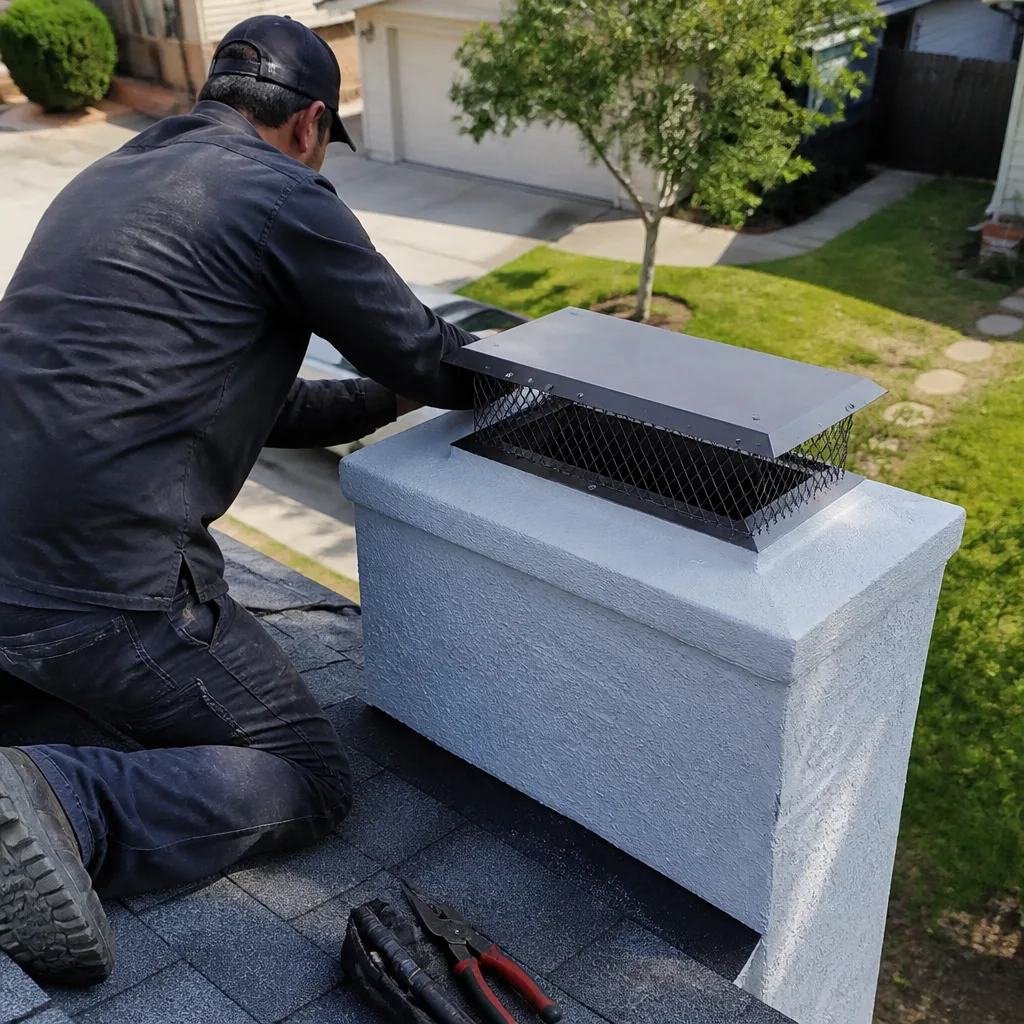
- Ignoring a recommendation to install a chimney cap. A missing cap invites rain, birds, squirrels, and raccoons. In Carmichael, where mature trees surround many homes, animal entry into chimneys is a constant issue. A $200 cap prevents a $500 animal removal and a potential flue blockage.
- Treating a sweep’s report as optional reading. The report is the product. Read it. If you don’t understand something, call and ask. A professional sweep will walk you through what the camera saw and what it means for your chimney’s lifespan and your family’s safety.
When to Call a Professional
Call a chimney specialist if you see flaking creosote on your flue walls, smell a strong campfire odor when the fireplace isn’t in use, notice water in the firebox after rain, hear animals in the chimney, or see visible cracks in the brickwork or crown. If a chimney fire has occurred, even a small one that burned itself out, you need a Level II inspection before the next fire. The same goes for homeowner-buyers closing on a Carmichael home with a fireplace: a pre-purchase Level II inspection costs a few hundred dollars and can reveal a liner replacement that changes the negotiation. Chimney Sweep Carmichael offers free estimates in Carmichael. Call (833) 593-4469 to schedule an inspection or discuss what you’re seeing.
Frequently Asked Questions
At least once per year for any wood-burning fireplace in Carmichael, and more often if you burn valley oak or almond during the compressed SMAQMD burn windows. Annual sweeping is the baseline; heavy use, unseasoned wood, or a history of Stage 2 creosote justifies a mid-season check.
A standard Level I sweep and inspection in Carmichael typically costs $180 to $260, while a Level II inspection with video scanning runs $250 to $400. Heavy creosote removal with rotary brushes adds $100 to $200. Call (833) 593-4469 for an exact quote, estimates are free.
Not necessarily. A hairline crack in a clay tile liner may be a candidate for HeatShield resurfacing, which seals the existing tiles without a full reline, at roughly half the cost. If the liner is severely deteriorated or the chimney is a prefab system with a failed flue pipe, a full replacement like a DuraFlex stainless liner is the right specification. The only way to know is a camera inspection with clear photo evidence.
Creosote accumulates, and the risk of a chimney fire rises. In Carmichael, where valley oak and almond produce Stage 2 creosote faster than national averages, skipping a single season can leave enough flammable material on the flue walls to support a hot chimney fire. A chimney fire can crack clay tiles, warp metal flues, and spread to the home’s structure.
Yes, especially in Carmichael homes with long vent runs from interior laundry rooms to exterior walls. Lint accumulation is the leading cause of dryer-related structure fires, and a clogged vent also forces your dryer to work harder, driving up energy costs and shortening the appliance’s life. Annual cleaning is recommended for most households.
Yes. Households that rely on wood as their only source of heat, and households below certain income thresholds, may qualify for exemptions on mandatory no-burn days. Check the SMAQMD website for current exemption criteria and application requirements. The exemption doesn’t change your chimney maintenance needs, it changes when you’re permitted to burn.
The Bottom Line
Carmichael’s burn woods, its air quality restrictions, and its housing stock make chimney maintenance here different from the generic advice in national guides. You’re burning dense valley hardwoods that form Stage 2 creosote quickly. You’re compressing your burn season around SMAQMD restrictions. And you likely live in either a 1970s – 1990s tract home with a prefab chimney or a mid-century home with a masonry flue, each of which fails in distinct ways. The response to all three variables is the same: annual inspection by a chimney and venting specialist, camera-verified diagnostics, and repairs that are specified before they’re sold. Whether you need a Chimney Sweep Carmichael home inspection, a repair, or a dryer vent cleaning, one call covers all three. Protect the system that protects your home.
Written by the team at Chimney Sweep Carmichael, serving Carmichael since 2012.
See the difference
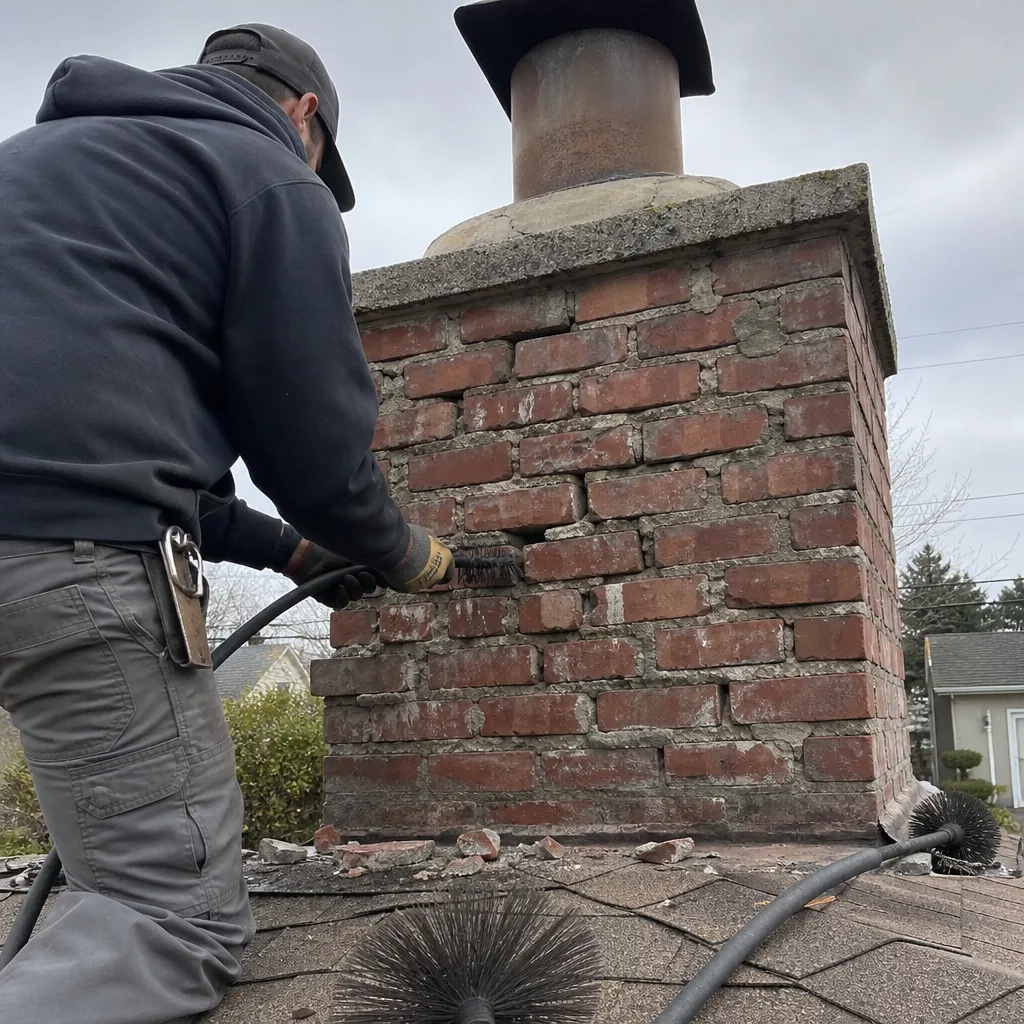 Before
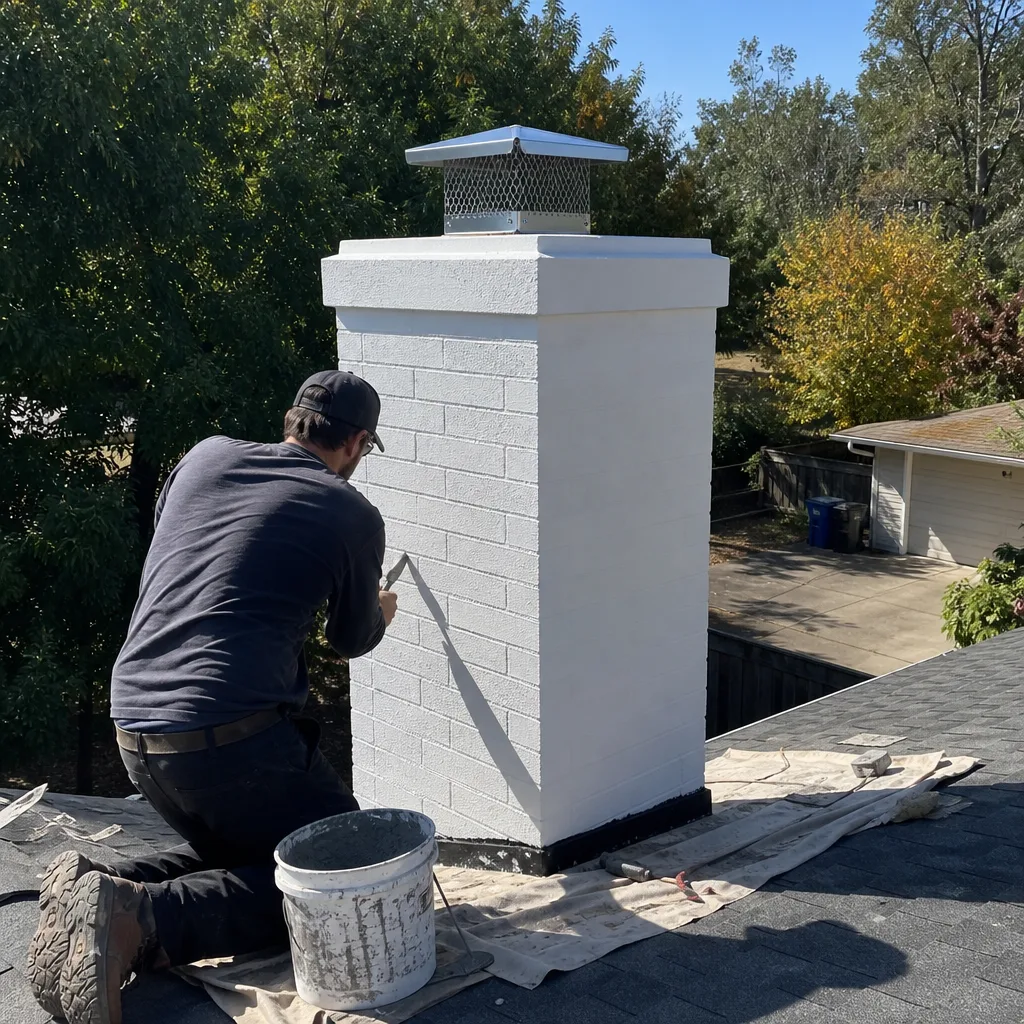 After
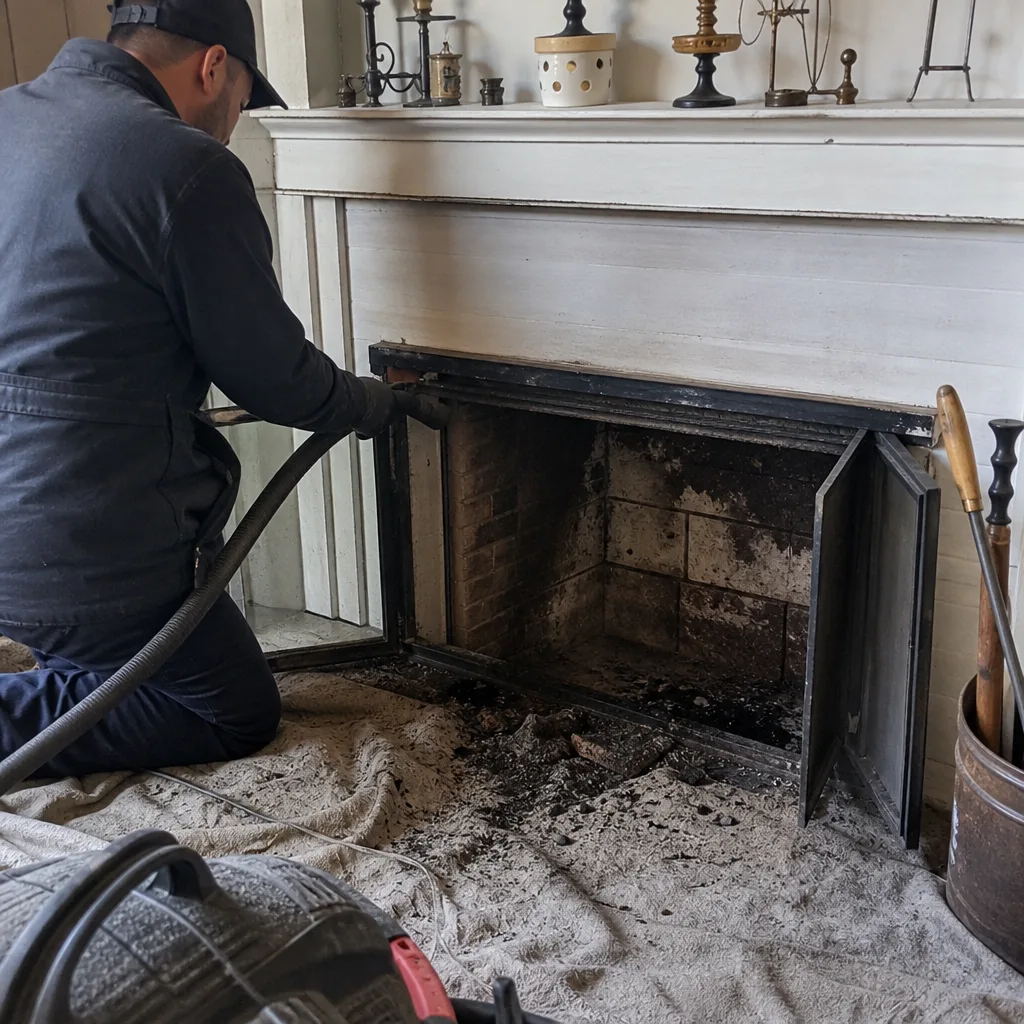 Before
 After
 Before
 After